



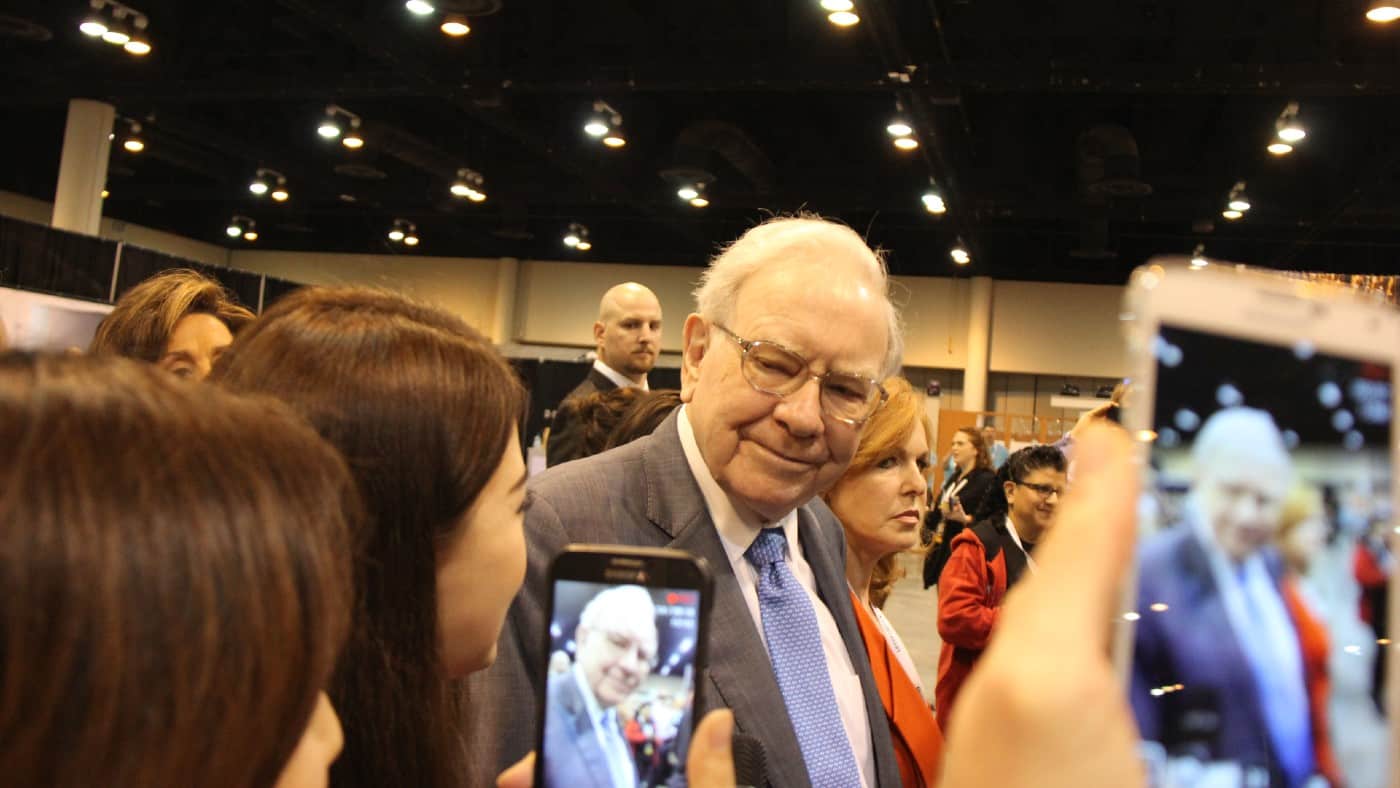
Billionaire investor Warren Buffett loves the ‘game’ of investing. It’s been his life’s work and at the age of 91, he still helms his masterpiece conglomerate company, Berkshire Hathaway.
By his own account he “tap dances to work” each day because he’s so happy. And he then puts in several hours at his desk, mostly reading company accounts or researching business opportunities. And there are loads more details about his history and lifestyle in his authorised biography The Snowball by Alice Schroeder.
Two major takeaways
Buffett is now very rich and counts his wealth in multiple billions of dollars. But I reckon there are two major takeaways from his life story and Schroeder’s book. The first is that Buffett’s enthusiasm drove his success because he always loved the process of investing. And l reckon loving what we do is important for all endeavours.
The second lesson I draw from the book comes from its title, The Snowball. Buffett realised when he was young that building financial gains upon earlier gains led to a compounding effect. And the process of compounding profits is the key to the way he made billions over time.
Albert Einstein once said: “Compound interest is the eighth wonder of the world. He who understands it earns it. He who doesn’t pays it.” The great thing about compounding financial gains is it multiplies money exponentially. And that means the overall returns accelerate each year.
Buffett’s vehicles for compounding gains have been the stock market and businesses. Through Berkshire Hathaway, he buys entire businesses and shares of listed companies.
However, two variables make a huge difference to the eventual outcome of any programme of compounding. One is the length of time spent compounding money. And the other is the rate of annual return earned.
Buffett’s a business-picker
We know from Buffett’s annual letters to the shareholders of Berkshire Hathaway he’s achieved compounded annual gains of around 20% since 1964. And returns annualised at that kind of rate explains much about why he’s a multi-billionaire now.
But small changes in the rate of annualised return make big differences to the value of an investment portfolio over time. So starting at the age of 40, it would take too long for me to accumulate a million, say, if my returns annualised out at just 1%, for example.
And Buffett emphasised his focus on picking high-quality businesses in his 2021 shareholder letter. He’s not a stock-picker, he said, he’s a business-picker. And that means picking enterprises that have the ability to grow their earnings year after year. And then those companies can reinvest some of that money to generate further growth.
So Buffett doesn’t flit from stock to stock. He buys stocks when they are assigning a fair valuation to what he describes as “wonderful” businesses. Then he holds on to his shares as the businesses themselves compound their earnings.
All stocks carry risks as well as positive potential. But my plan for building wealth from a standing start at 40 involves saving as much as possible every month. Then investing into shares I’ve chosen carefully to hold for the long term, like Warren Buffett.