


How I’d invest £5k the Warren Buffett way

These six rules from Warren Buffett help me find and hold the shares of companies backed by great businesses and I’d use them to invest £5k today.

The content of this article was relevant at the time of publishing. Circumstances change continuously and caution should therefore be exercised when relying upon any content contained within this article.

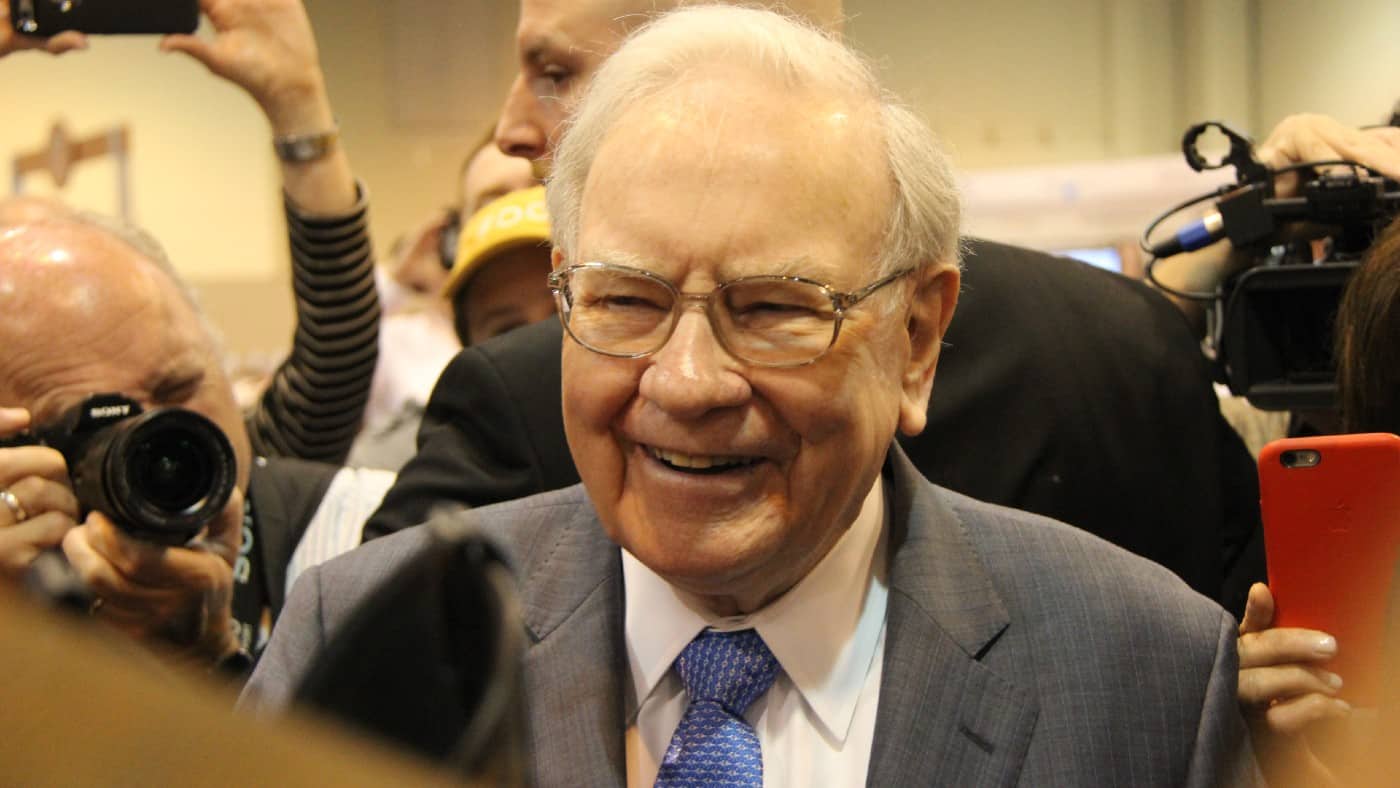
Warren Buffett at a Berkshire Hathaway AGM

Image source: The Motley Fool

You’re reading a free article with opinions that may differ from The Motley Fool’s Premium Investing Services. Become a Motley Fool member today to get instant access to our top analyst recommendations, in-depth research, investing resources, and more. Learn More.

RISK WARNING: should you invest, the value of your investment may rise or fall and your capital is at risk. Before investing, your individual circumstances should be assessed. Consider taking independent financial advice. The Motley Fool believes in building wealth through long-term investing and so we do not promote or encourage high-risk activities including day trading, CFDs, spread betting, cryptocurrencies, and forex. Where we promote an affiliate partner’s brokerage products, these are focused on the trading of readily releasable securities.

Warren Buffett’s success at investing in general stocks and shares over many years is remarkable. Between 1964 and 2020, he achieved a compound annual growth rate of around 20% via his investment company and conglomerate Berkshire Hathaway.

It’s true that others have achieved higher annualised rates of return. But few investors have kept up the positive momentum in their portfolios for as long as Buffett has.

I watched an interesting video clip recently during which Buffett mentioned six rules he applies to his own stock purchases. And I’d use them to invest £5k in stocks today.

1) Buy wonderful businesses, not cigar butts

Buffett said he first approached investing while deep under the influence of Benjamin Graham — the so-called father of value investing. In essence, the younger Buffett prioritised ‘cheap’ over ‘quality’. And that meant he would often buy the shares of weak businesses when the valuation was on the floor.

The idea was to gain from a possible quick bounce-back in the stock. And he said it was like getting one last puff from a discarded cigar butt!

However, Buffett reckons that approach was “a mistake”. And he soon switched to a new strategy prioritising ‘quality’ over ‘cheap’ and buying what he calls “wonderful” businesses at fair valuations to hold for the long term.

2) Buy only the stocks of businesses you understand

Buffett sticks to what he calls his circle of competence. If he doesn’t fully understand how a business makes money, he won’t invest in its stock. In one example, he avoided the fast-growing technology sector for years.

3) Buy stocks below what a company is worth

One idea Buffett carried forward from his days under Graham is the concept of a margin of safety. Buffett buys stocks when the valuation they’re assigning to a business is below what the business is actually worth.  And then there’s a better chance his investment will do well over time.

4) Seize the opportunity

This has a double meaning. Firstly, he acts decisively and buys shares in a company when he spots an opportunity. Secondly, he buys a “meaningful amount” of the shares. He once said: “Opportunities come infrequently. When it rains gold, put out the bucket, not the thimble.”

5) Don’t sell because of price fluctuations

Once holding the shares of a great business, Buffett tends to cling onto them through thick and thin. So events such as the Coronavirus crash of 2020 and the recent tech- and growth-stock sell-off wouldn’t have shaken him from his stock positions.

6) Approach buying stocks like you would if you were buying the entire business

Within Berkshire Hathaway, Buffett does both. He buys other businesses outright and adds them to the conglomerate. And he buys the stocks of businesses listed on the stock market. But his selection and due diligence procedures are the same for both. And he considers himself to be a part-owner of the businesses underlying his stocks. Therefore, he holds them with the same tenacity as a business he controls completely.

RISK WARNING: should you invest, the value of your investment may rise or fall and your capital is at risk. Before investing, your individual circumstances should be assessed. Consider taking independent financial advice. The Motley Fool believes in building wealth through long-term investing and so we do not promote or encourage high-risk activities including day trading, CFDs, spread betting, cryptocurrencies, and forex. Where we promote an affiliate partner’s brokerage products, these are focused on the trading of readily releasable securities.

Kevin Godbold has no position in any of the shares mentioned. The Motley Fool UK has no position in any of the shares mentioned. Views expressed on the companies mentioned in this article are those of the writer and therefore may differ from the official recommendations we make in our subscription services such as Share Advisor, Hidden Winners and Pro. Here at The Motley Fool we believe that considering a diverse range of insights makes us better investors.

More on Investing Articles

Investing Articles

Publish Test

Lorem ipsum dolor sit amet, consectetur adipiscing elit. Sed do eiusmod tempor incididunt ut labore et dolore magna aliqua. Ut…

Read more »

Investing Articles

JP P-Press Update Test

Read more »

Investing Articles

JP Test as Author

Test content.

Read more »

Investing Articles

KM Test Post 2

Read more »

Investing Articles

JP Test PP Status

Test content. Test headline

Read more »

Investing Articles

KM Test Post

This is my content.

Read more »

Investing Articles

JP Tag Test

Read more »

Investing Articles

Testing testing one two three

Sample paragraph here, testing, test duplicate

Read more »