


2 warning signs that a stock market crash could be just round the corner

As stocks continue to ride high, Andrew Mackie examines two warning signs that a stock market crash could be about to strike

The content of this article was relevant at the time of publishing. Circumstances change continuously and caution should therefore be exercised when relying upon any content contained within this article.

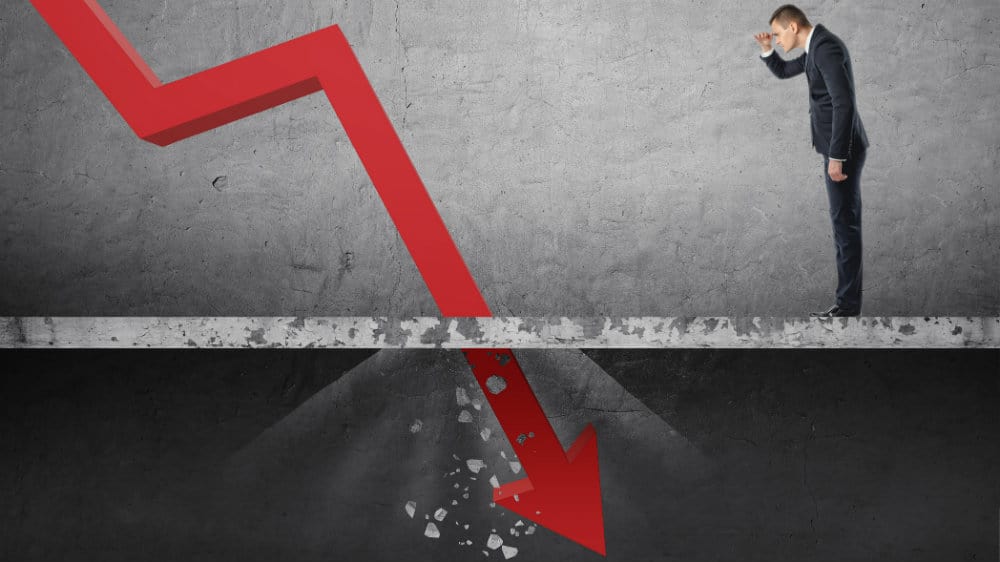
Businessman looking at a red arrow crashing through the floor

Image source: Getty Images.

You’re reading a free article with opinions that may differ from The Motley Fool’s Premium Investing Services. Become a Motley Fool member today to get instant access to our top analyst recommendations, in-depth research, investing resources, and more. Learn More.

RISK WARNING: should you invest, the value of your investment may rise or fall and your capital is at risk. Before investing, your individual circumstances should be assessed. Consider taking independent financial advice. The Motley Fool believes in building wealth through long-term investing and so we do not promote or encourage high-risk activities including day trading, CFDs, spread betting, cryptocurrencies, and forex. Where we promote an affiliate partner’s brokerage products, these are focused on the trading of readily releasable securities.

Over the last 10 years, equity markets have been riding the crest of a wave — the longest bull market in history. The short-lived recession, induced by the Covid-19 crash, turned out to be a mere blip on this upward trajectory. Central banks came to the rescue by injecting the largest fiscal and monetary stimulus ever seen in the economy. But as the consequences of this loose monetary policy become apparent, we could be on the cusp of a spectacular stock market crash.

Although a black swan event could happen any time, a number of danger signals are already clearly visible. These are my top two.

Rising inflation

Not a day goes by without inflation being talked about in the press. In the US, the latest figures for December put inflation at 7%, the largest yearly rise since 1982. Although the UK figure is not as high (currently at 5.4%) it has been on a similar upward trajectory for some time. The number one contributor to this rise has been soaring oil and gas prices.

A number of economists argue inflation will unwind as supply chains find their feet and economies re-open following Covid. I am not too sure. Indeed, if we are finally seeing the back of the pandemic, supply chain pressures will likely continue for some time.

Further, infrastructure spending in the commodities sector has been in decline for some time. One of the key factors that can attributed to this is the ESG trend. Activist investors and governments have stepped in to prevent oil companies from exploring for new reserves. Although well-intentioned, the reality is that the world needs fossil fuels and will do so for some time as we transition to a green economy. If one looks back in history, whenever oil prices have surged, a recession has never been far away.

Valuations in the US tech sector

By any measure, the US stock market looks overvalued. For me, the primary driver of the asset bubble in the tech sector, and most notably in software companies, has been ultra-easy financial conditions.

The US Federal Reserve has been way behind the curve when it comes to dealing with the threat of inflation. Only recently have they begun to signal their intention to accelerate the tapering of their purchases of financial assets. A number of interest rate rises are now expected. I think we all know what is likely to happen to tech companies, some of which have reached insane valuations, if rates do start rising from here.

The top five companies by market cap in the US – Apple, Alphabet, Tesla, Microsoft, Amazon – are undoubtedly great companies that generate huge profits. But at what point do their valuations become unsustainable? In early 2000, at the peak of the tech bubble, if I had invested in the five largest companies of the day – Microsoft, General Electric, Cisco, Intel, and Exxon Mobil – all of which we can agree are great companies – it would have turned out to be a very bad investment with negative real-returns over the next 10 years.

Today, virtually every tech ETF/fund on the planet is invested in these mega-cap stocks. We have a lot of investors on one side of the boat. The huge imbalances in the economy, that Covid has laid bare, means most could be jumping ship very soon.

RISK WARNING: should you invest, the value of your investment may rise or fall and your capital is at risk. Before investing, your individual circumstances should be assessed. Consider taking independent financial advice. The Motley Fool believes in building wealth through long-term investing and so we do not promote or encourage high-risk activities including day trading, CFDs, spread betting, cryptocurrencies, and forex. Where we promote an affiliate partner’s brokerage products, these are focused on the trading of readily releasable securities.

Andrew Mackie has no position in any of the shares mentioned

Suzanne Frey, an executive at Alphabet, is a member of The Motley Fool’s board of directors. Teresa Kersten, an employee of LinkedIn, a Microsoft subsidiary, is a member of The Motley Fool’s board of directors. John Mackey, CEO of Whole Foods Market, an Amazon subsidiary, is a member of The Motley Fool’s board of directors. The Motley Fool UK has recommended Alphabet (A shares), Amazon, Apple, Microsoft, and Tesla. Views expressed on the companies mentioned in this article are those of the writer and therefore may differ from the official recommendations we make in our subscription services such as Share Advisor, Hidden Winners and Pro. Here at The Motley Fool we believe that considering a diverse range of insights makes us better investors.

More on Investing Articles

Investing Articles

Publish Test

Lorem ipsum dolor sit amet, consectetur adipiscing elit. Sed do eiusmod tempor incididunt ut labore et dolore magna aliqua. Ut…

Read more »

Investing Articles

JP P-Press Update Test

Read more »

Investing Articles

JP Test as Author

Test content.

Read more »

Investing Articles

KM Test Post 2

Read more »

Investing Articles

JP Test PP Status

Test content. Test headline

Read more »

Investing Articles

KM Test Post

This is my content.

Read more »

Investing Articles

JP Tag Test

Read more »

Investing Articles

Testing testing one two three

Sample paragraph here, testing, test duplicate

Read more »