



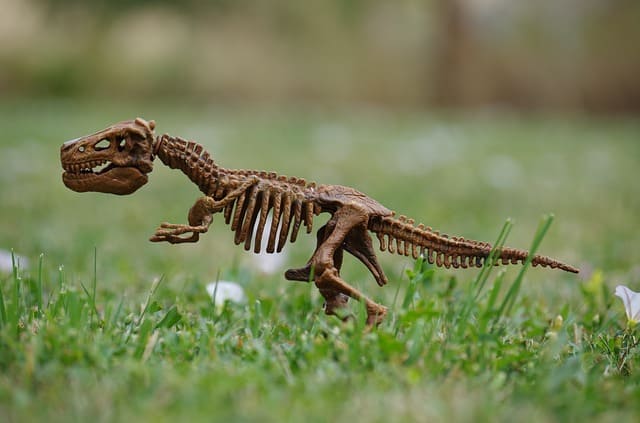
Active fund managers once ruled the earth, but now they are heading for extinction. And the sooner most of them die out, the better.
Recently, I revealed that 98% of US fund managers trailed the benchmark S&P Global 1200 index over 10 years.
Even more shockingly, every single active emerging market fund failed to beat their benchmark. That’s right, every single one.
Asset managers are still kings of all they survey, charging hefty fees and enjoying lavish lifestyles at investors’ expense, but now their days are numbered. Evolution is finally catching up with them.
Mass extinction
Fund managers aren’t the large-brained, nimble-footed mammals that investors have been led to believe.
Quite the reverse: they are dinosaurs. And like the dinosaurs, they are heading for extinction.
New figures from S&P show that more than half of all equity funds have died out in the last 10 years.
Its SPIVA Europe Scorecard found that of the 535 UK equity funds that were active in 2006, only 46% were still alive last year.
Life expectancy is even shorter in Europe, with only 39% living for a decade, and 41% in the US. The death rate is brutal.
In fact, I’m being unfair to dinosaurs: they roamed the earth for 350 million years, equity funds are lucky to last a decade.
S&P says reason they are being culled due to “continued underperformance”. It’s that simple.
Dying out
Ironically, this high extinction rate makes active fund performance look better than it really is. When judging active fund performance, too many people only look at the survivors, the dead are conveniently forgotten, which distorts overall performance in their favour.
S&P’s figures do allow for this “survivorship bias”, and expose active funds as the cold-blooded, slow-brained plodders they truly are.
Mass extinction
The dwindling number of investment industry professionals who still defend active funds like to point to the winners, the small breed of managers who regularly do beat the market.
At the same time they conveniently ignore the far larger number of losers, those destined to die, unmourned, in the great investment fund graveyard.
However, the message is steadily getting through, which explains the dramatic surge in popularity of exchange traded funds (ETFs).
These low-cost trackers, which can be bought and sold like shares, can never beat the market but nor can they underperform either. They are killing off active fund managers in the same way the meteor strike did for the dinosaurs.
Take control
It also explains why more investors now choose to build their own portfolio of stocks and shares, and live or die by their own decisions, rather than pay a fund manager to do the work on their behalf (and almost certainly fail).
It pays to keep a closer eye on your investment decisions. The alternative is to watch your portfolio go the way of the dinosaurs.